Insights
Property Management Sustainability Plan Montreal
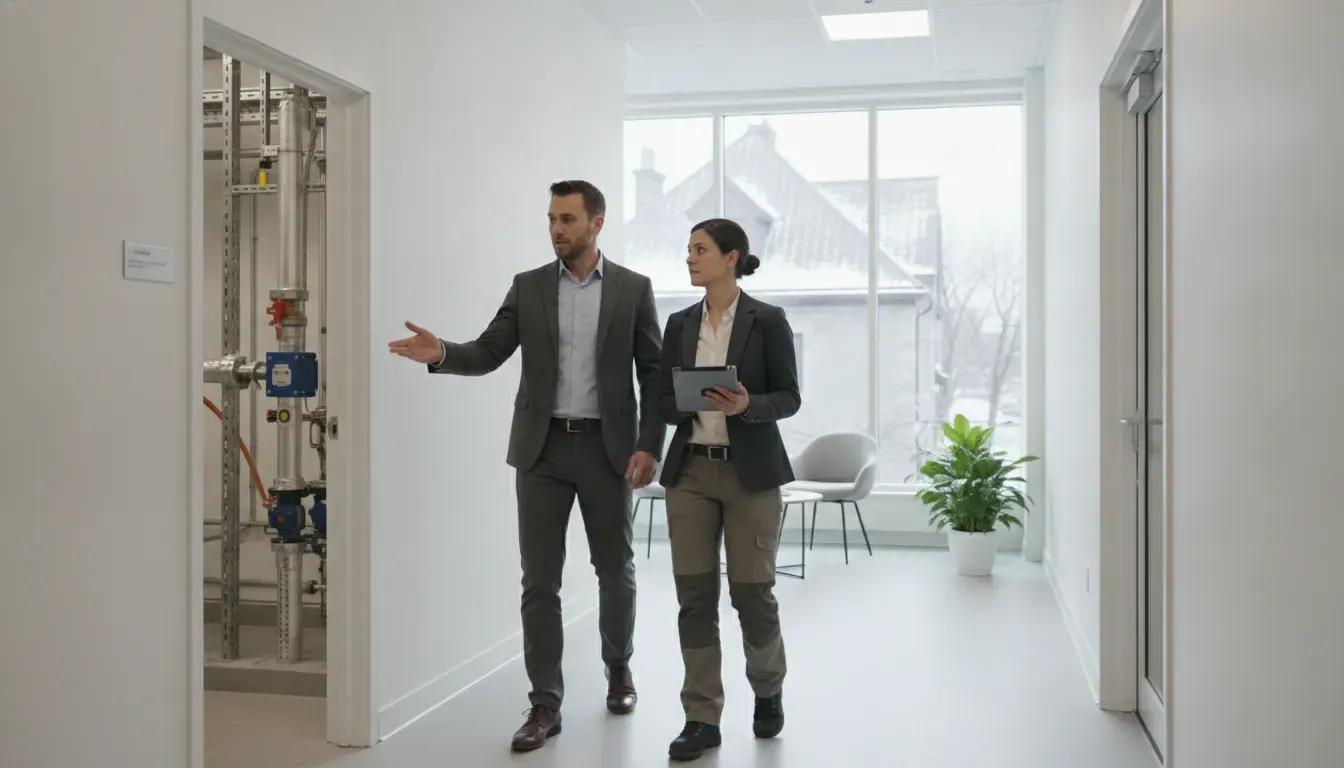
A property management sustainability plan Montreal owners can use should improve how a building is operated, maintained, and monitored over time. Rather than treating sustainability as a broad promise or a one-time renovation, the plan connects energy. Water, waste, inspections, vendors, and reporting to the ordinary work required to protect a property.
In practical terms, a property management sustainability plan is an owner-approved operating framework. It identifies the building's current condition, sets priorities that fit the asset and budget, assigns responsibility. And creates a review cycle so sustainability actions become part of maintenance, inspections, vendor coordination, and property reporting.
Request a proposal from PGK Realty Services to discuss a practical management framework for your Montreal property.
How a Property Management Sustainability Plan Supports Montreal Owners
A sustainability plan is a documented set of operating priorities for a property. It should tell an owner what the building is trying to improve, why each priority matters. Who is responsible for the next action, how progress will be recorded, and when the plan will be reviewed.
For a property owner, this approach is more useful than a list of disconnected green initiatives. A new light fixture, a waste-sorting station, or an equipment replacement may be worthwhile, but none of those actions creates a durable management system by itself. The value of a plan is the connection between decisions and execution.
A well-constructed plan normally includes:
- A baseline: the property's systems, condition, operating routines, available records, and known constraints.
- Priorities: the actions most relevant to safety, reliability, occupant experience, resource use, and long-term asset stewardship.
- Ownership: the person or service provider responsible for coordinating each action.
- Timing: a sequence that distinguishes immediate operational improvements from planned capital work.
- Evidence: work orders, inspection notes, invoices, readings, vendor reports, and other records that show what happened.
- Review: a recurring process for checking whether priorities remain appropriate as the property, regulations, tenants, and equipment change.
This is an operational planning document, not a certification, an environmental guarantee, or a promise of a particular financial result. It should be tailored to the building and supported by qualified professionals when an action involves engineering, electrical work, hazardous materials, code compliance, or another regulated field.
Why Should Montreal Property Owners Create One?
Montreal owners manage buildings through changing seasons, aging equipment, different occupancy patterns, and a wide range of residential, commercial, and industrial requirements. A sustainability plan helps organize those realities instead of allowing important decisions to remain reactive.
The City of Montreal's guidance for building owners identifies practical areas such as heating, ventilation, lighting, the building envelope, and responsible handling of equipment and materials. Its building energy guidance is a useful starting point for identifying topics to investigate, but the appropriate action still depends on the property's systems, condition, use, and professional assessments.
Some larger Montreal buildings may also have reporting obligations. The City describes requirements under By-law 21-042 concerning GHG emission disclosures and ratings, including buildings at or above stated size or dwelling thresholds. Owners should confirm current applicability and deadlines directly with the City or qualified advisers. A property management plan can help keep the necessary records organized, but it should not be presented as a substitute for legal or regulatory advice.
For owners, the practical benefits of structured planning include:
- Fewer missed maintenance opportunities: recurring inspections and service records can reveal issues before they become urgent.
- Better capital planning: equipment condition and operating observations can inform the order and timing of future work.
- Clearer vendor coordination: contractors can receive defined scopes, access instructions, documentation requirements, and follow-up expectations.
- More consistent owner reporting: management updates can explain actions, decisions, unresolved issues, and next steps in a way that is easier to review.
- Greater continuity: a documented process is less dependent on one person remembering informal arrangements or past conversations.
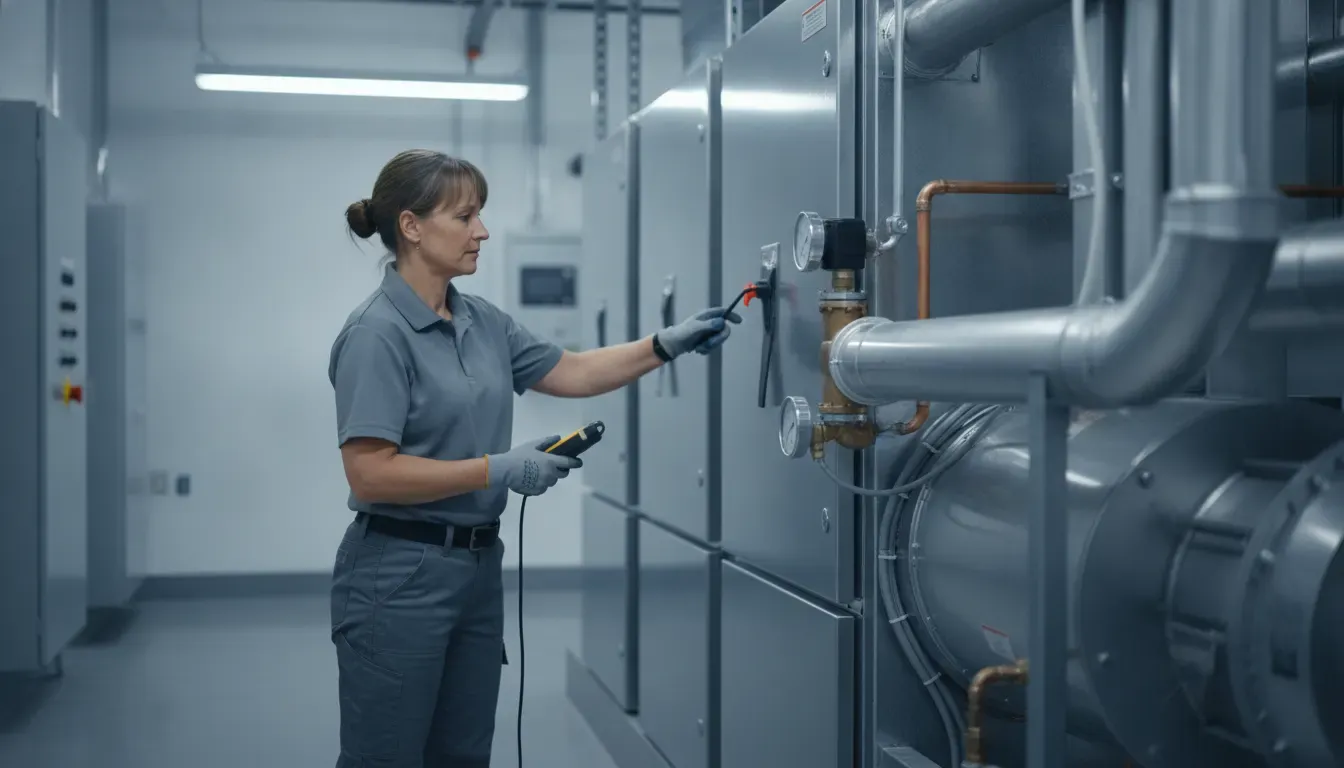
Regular inspections help owners connect building condition with practical sustainability priorities.
Build a Practical Sustainability Baseline
The first stage is not to choose a technology. It is to understand the property as it operates today. The baseline should be proportionate to the asset and should distinguish confirmed information from assumptions that require further investigation.
Review the building and its operating records
Start with the information already available. Useful records may include inspection reports, maintenance histories, utility statements, equipment inventories, service contracts, capital plans, waste arrangements, and records of recurring occupant complaints. For commercial and industrial properties, the review may also include operating schedules, loading areas, specialized equipment, tenant responsibilities, and access requirements.
A property inspection adds the physical perspective that records alone cannot provide. The review should note visible condition, recurring failures, water or air infiltration concerns, lighting and controls. Mechanical access, storage areas, waste handling, and any safety issue that needs prompt attention. The purpose is not to perform an engineering audit without the right credentials. It is to create a reliable management brief and identify where specialist assessment is warranted.
Separate priorities by risk, impact, and feasibility
Not every desirable action belongs in the next work cycle. Owners and managers can sort potential actions into three practical questions:
| Question | What it clarifies |
|---|---|
| What risk does this address? | Whether the action affects reliability, safety, water intrusion, equipment failure, regulatory exposure, or another material property concern. |
| What operational improvement is plausible? | Whether the action could improve consistency, comfort, resource use, maintenance visibility, or the useful life of an asset. |
| What is feasible now? | Whether access, budget, tenant coordination, technical information, permits, and qualified vendors are available. |
This method avoids two common mistakes. The first is selecting a highly visible project that is not the building's most important need. The second is creating a long list with no person, timing, or decision path attached to it. A short, accountable priority list is more useful than an ambitious document that cannot be maintained.
Which Operating Areas Belong in the Plan?
The plan should cover the areas where day-to-day management can influence building performance and asset stewardship. The exact mix varies by property, but the following categories provide a useful starting framework.
Energy and building systems
Record the major heating, cooling, ventilation, lighting, and control systems, along with known service intervals and recurring issues. Review whether operating schedules match the building's actual use. Where an upgrade is being considered, obtain an appropriate technical assessment and compare the full implications, including installation, maintenance, occupant disruption, compatibility, and expected service life. Avoid promising a fixed reduction in costs or emissions without a property-specific analysis.
For commercial and institutional owners, Natural Resources Canada's Major Energy Retrofit Guidelines provide a useful reference for thinking about retrofit stages and investigation. The document is a general technical resource, not a substitute for design, commissioning, or advice from licensed professionals.
Water and moisture management
Water-related sustainability work often begins with protection. Track recurring leaks, damaged fixtures, irrigation concerns where applicable, drainage observations, and areas that require closer inspection. A prompt response to a small leak can protect finishes, reduce disruption, and prevent a minor issue from becoming a larger building problem. Where equipment changes are proposed, confirm suitability and maintenance requirements rather than treating a product label as proof of performance.
Preventive maintenance and asset life
Maintenance is the operating bridge between a sustainability objective and a functioning property. Keep service schedules current, document completed work, and distinguish preventive tasks from emergency repairs. When a component repeatedly fails, investigate the pattern instead of simply resetting the same work order. A manager can then present the owner with a clearer choice between continued repair, redesign, replacement, or further technical review.
Waste, materials, and vendor practices
Review how waste is stored, collected, sorted, and documented. The plan may address collection access, contamination issues, bulky items, renovation debris, end-of-life equipment, and communication with occupants or tenants. Vendor scopes can also include expectations for protecting common areas, removing materials responsibly, providing completion records, and reporting exceptions. These details make sustainability part of service coordination rather than an isolated campaign.
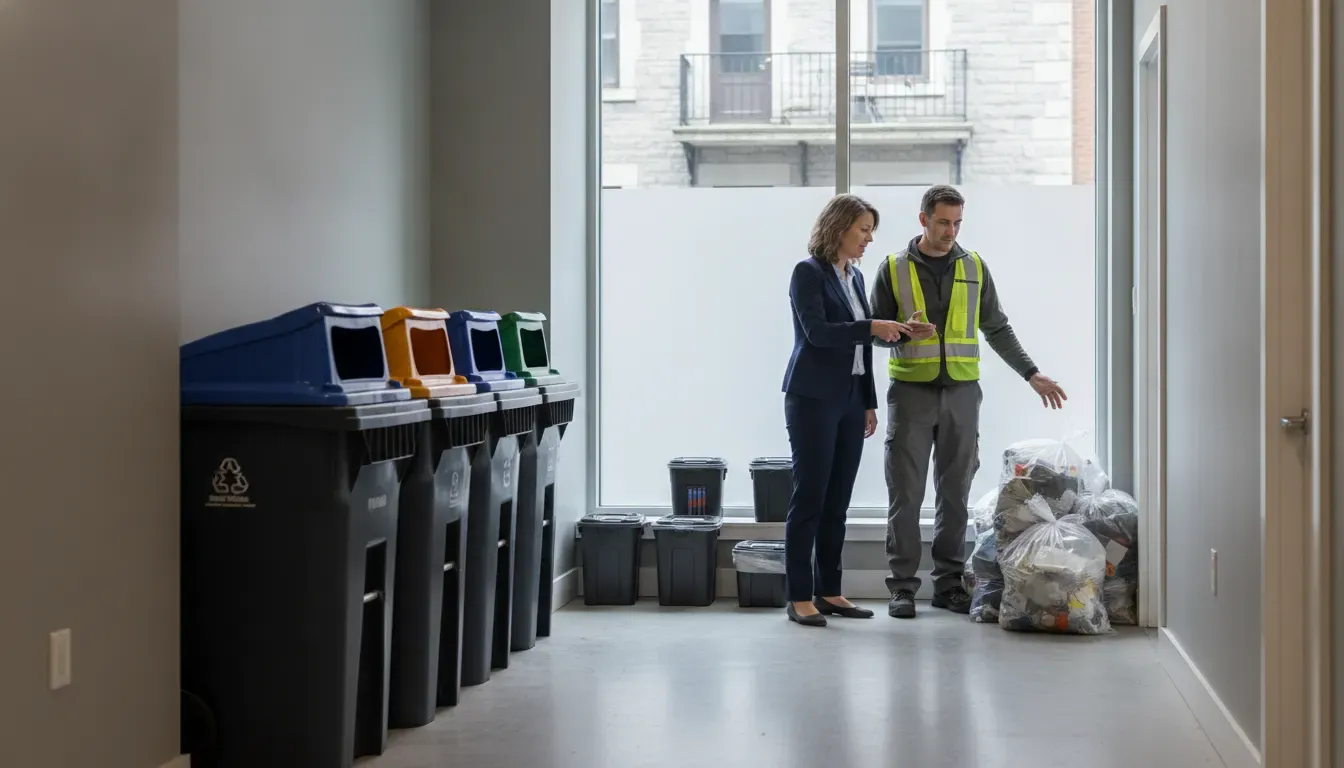
Clear vendor scopes and organized waste areas make operational priorities easier to manage.
Inspections and occupant experience
Inspections should connect physical observations with follow-up. The right frequency depends on the property, occupancy, risk profile, and scope of service. For vacant units or buildings, routine inspection protocols can help identify heating, moisture, security, or maintenance concerns. For occupied properties, communication and scheduling matter because an action that improves a system but disrupts occupants without adequate notice can create avoidable operational friction.
PGK's property inspection services are one example of how inspection work can support a broader management process. The appropriate inspection scope should be confirmed for the particular asset and owner objective.
Turn the Plan Into Recurring Property Operations
A sustainability plan only becomes useful when it is translated into work that someone can schedule, coordinate, and verify. Property managers can integrate the plan into existing management routines rather than creating a parallel administrative system.
- Assign responsibility. Name the owner representative, manager, superintendent, vendor, or specialist responsible for the next step. Shared responsibility without a named coordinator usually leads to delay.
- Create a work calendar. Place inspections, filter changes, equipment service, waste reviews, vendor meetings, and owner reporting on a recurring calendar. Add seasonal tasks relevant to Montreal conditions.
- Use defined scopes. When requesting vendor proposals, describe the issue, access conditions, deliverables, records required, and closeout expectations. Ask vendors to identify assumptions and exclusions.
- Keep an evidence trail. Store photos, work orders, invoices, readings, service reports, approvals, and unresolved items in an organized property record. Good records support continuity and more precise owner decisions.
- Review and recalibrate. At an agreed interval, review what was completed, what changed, what remains open, and whether the next priorities still reflect the property's condition and ownership objectives.
Owners who prefer a partial management arrangement can still use this structure. For example, an owner may delegate inspections and vendor coordination while retaining direct control over capital approvals. The plan should make those boundaries explicit so that an important task does not fall between service responsibilities.
Explore PGK property management services if you want sustainability priorities integrated with maintenance coordination, inspections, bookkeeping, tenant management, and day-to-day oversight.
What Should Owners Measure and Report?
Measurement should be useful for a decision, not added for appearance. Begin with information the property can collect consistently, then improve the record over time. A report may include a concise status for each priority, the action taken, the responsible party, supporting records, and the next decision required from the owner.
| Reporting area | Examples of useful management evidence |
|---|---|
| Energy and equipment | Utility records where available, service dates, equipment condition, recurring faults, operating schedule observations, and proposed investigations. |
| Water and building condition | Leak or moisture observations, completed repairs, inspection findings, and open follow-up items. |
| Waste and vendors | Collection arrangements, recurring exceptions, vendor scopes, completion records, and areas requiring better coordination. |
| Occupant and tenant operations | Communication issued, access constraints, complaints or comfort observations, disruption planning, and resolution status. |
| Capital priorities | Condition-based rationale, technical advice received, options considered, owner decision, timing, and budget information when available. |
Do not report an estimated savings percentage, emissions reduction, return, or compliance outcome unless it has been calculated or confirmed for the specific property by an appropriate source. A credible report can say that an issue was inspected, a scope was obtained, a repair was completed, or a decision is pending. Clear limits are more valuable than false precision.
Tailor the Plan to Residential, Commercial, and Industrial Assets
A sustainability plan should reflect how the property is used and who controls each operating decision.
- Residential properties: priorities may include common-area lighting, heating consistency, water protection, waste communication, vacant-unit inspections, and respectful coordination with residents.
- Commercial properties: the plan may need to account for tenant schedules, common-area systems, office or retail operating hours, access protocols, service contracts, and communication with multiple occupants.
- Industrial properties: owners and managers may need to coordinate specialized equipment, production schedules, loading areas, safety requirements, waste streams, and technical vendors. Regulatory or environmental questions should be handled with the appropriate qualified advisers.
- Institutional and trust-held portfolios: the plan should support professional reporting, documented approvals, clear records, and a level of oversight appropriate to fiduciary expectations.
PGK Realty Services manages residential, commercial, and industrial properties in the Greater Montreal area and provides bilingual service. A management conversation should begin with the property type, current operating model, owner objectives, and the areas where the owner wants clearer coordination or reporting. Pricing and scope should be established through a custom proposal rather than assumed from a generic plan.
FAQs: Sustainability Planning for Property Owners
Is a sustainability plan only for large Montreal buildings?
No. A smaller residential or commercial property can use the same logic at a more appropriate scale: establish a baseline. Identify practical priorities, assign responsibility, keep records, and review the results. Larger buildings may require more detailed data, technical assessments, or regulatory review, but the planning principle applies to any property where consistent operations matter.
Should an owner start with an energy upgrade?
Not automatically. Energy may be a useful priority, but the first action should follow the building's condition, risk, available records, and ownership objectives. A maintenance or moisture issue may deserve earlier attention than an efficiency project. Start with a baseline and obtain qualified advice before selecting equipment or committing to a capital project.
How does a property manager support sustainability planning?
A property manager can coordinate inspections, maintenance schedules, vendors, tenant communication, records, and owner reporting. The manager does not replace engineers, contractors, legal advisers, or other specialists. The value is in connecting technical recommendations and owner decisions to the recurring work that keeps a property operating.
Request more information from PGK Realty Services to discuss a sustainability planning framework aligned with your property's needs.
Request a proposal from PGK Realty Services to put a practical sustainability plan into the day-to-day management of your Montreal property.