
Insights
Property Management Insurance Claims Coordination in Montreal: Owner Guide

Property management insurance claims coordination Montreal owners need is an operational process: protect people and property, preserve factual records, coordinate authorized activity, and keep the right parties informed. A property manager may help organize that work, but does not decide whether damage is covered or what an insurer will pay.
Contact PGK about your property
In brief: Establish a point of contact, address immediate safety needs, record what was observed and done, and ask the insurer how to report the event. Confirm who may authorize spending and repairs. Keep a dated action log until open questions, documents, and operational follow-up have been resolved.
Discuss your property’s management requirements and request a proposal from Le Service Mobilier PGK.
What does insurance claims coordination involve for a property manager?
Claims coordination is the practical work around a potential insured loss. It is not the same as adjusting a claim, interpreting a policy, or promising that a loss will be covered. Depending on the property and management agreement, coordination may include gathering records, arranging access, communicating with the owner and relevant vendors, tracking repairs, and keeping an orderly event file.
The distinction matters because different parties hold different responsibilities. A manager may help information move through an agreed process. The insurer and policyholder have their own roles, and the insurer makes decisions under the applicable policy. The owner should confirm questions about notice, deductibles, documentation, and coverage directly with the insurer or a qualified insurance professional. A manager should not present an operational observation as an insurance conclusion.
For a residential building, the immediate work might involve documenting a leak, arranging an authorized inspection, and tracking restoration visits. For a commercial or industrial property, coordination may also involve tenant operations, building access, equipment, deliveries, or several decision-makers. The response should fit the property’s actual risks and the services included in the management scope.
Le Service Mobilier PGK provides property management services in Greater Montreal, including maintenance coordination and bookkeeping. Owners considering how a manager can fit into their operating process can review PGK’s property management services and define the relevant responsibilities in a proposal and management agreement.
What should an owner do first after property damage?
Start with people and immediate safety. Follow applicable emergency procedures and contact emergency services when needed. Do not delay urgent steps to protect people while waiting for an insurance discussion. For property actions, use qualified professionals where appropriate, and do not enter an unsafe area or disturb a hazard.
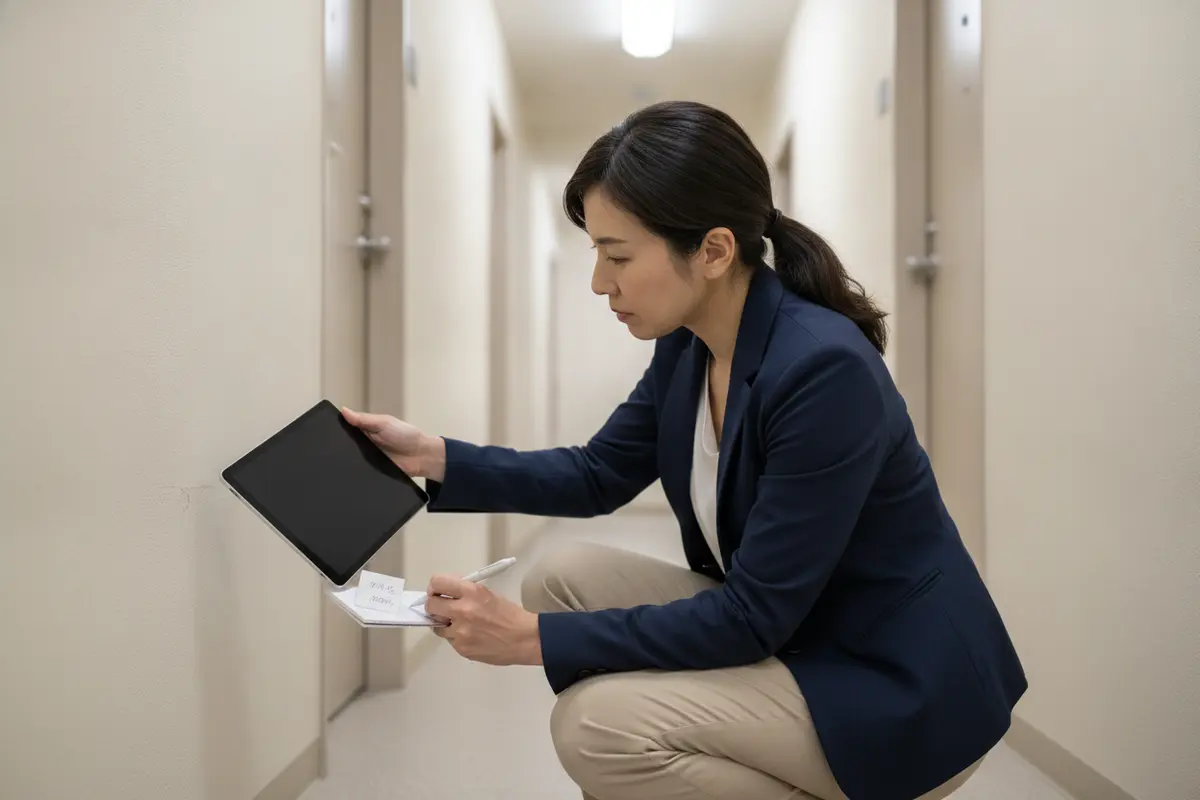
Once immediate risks are addressed, establish a simple incident record. Write down when the issue was discovered, who reported it, what areas appear affected, and what steps have already been taken. Distinguish direct observations from assumptions. “Water visible on the corridor floor at 9:15 a.m.” is more useful than an unverified conclusion about the source or cause.
- Stabilize the situation. Arrange reasonable emergency measures to protect people and limit further damage, using appropriate emergency or maintenance contacts.
- Notify the owner’s designated contact. Share the known facts, discovery time, actions taken, access needs, and decisions awaiting authorization.
- Contact the insurer or broker as appropriate. Ask how and when the event should be reported, what records are requested, and whether there are instructions about inspection or repairs.
- Record the condition. Preserve dated photographs or video where safe and permitted, identify affected locations, and retain relevant messages, invoices, and work orders.
- Track each next step. Note who owns the action, expected timing, and whether the owner, insurer, tenant, or contractor must respond.
These are operational steps, not a statement of a legal deadline or policy requirement. Requirements vary by policy and circumstance. Owners should follow instructions from their insurer and their own professional advisers. A manager should avoid declaring that one particular action guarantees coverage or a claim outcome.
A short first update can follow a consistent structure: what was reported, when and where it was reported, what is directly observable, what immediate action was taken, whether access or operations are affected, and what decision is needed next. If a detail is unknown, say so. That prevents an early message from being repeated as a confirmed fact after later information changes the picture.
Which records make coordination clearer?
A concise, consistent file reduces confusion when several parties are involved. The goal is not to create a speculative narrative. It is to preserve contemporaneous information and make it easy to see what was reported, what was observed, what was authorized, and what remains outstanding. An orderly record also helps an owner answer later questions without relying on memory or searching across separate inboxes.
| Record | What to capture | How it helps coordination |
|---|---|---|
| Incident log | Date and time discovered, reporter, location, observed condition, immediate actions | Creates a chronological starting point and separates observations from conclusions. |
| Images and condition notes | Dated images where safe, affected areas, visible changes, access limitations | Shows what was observed at a particular time without determining cause or coverage. |
| Communications | Insurer or broker contact details, calls, emails, instructions, follow-up dates | Shows what was requested, shared, or left unanswered. |
| Work and cost records | Work orders, contractor details, estimates, approvals, invoices, receipts | Connects authorized work to the event and supports the owner’s review. |
| Building and tenant information | Relevant maintenance history, access arrangements, affected units or operations | Helps coordinate access and identify operational dependencies without assuming cause. |
| Decision and action tracker | Open question, responsible person, authorization status, next step, completion date | Makes unresolved items visible and reduces duplicated requests. |
Use a neutral naming convention for files, such as date, property, and subject. Preserve original records where practical. Keep sensitive information limited to people who need it, and use the owner’s established recordkeeping practices. A property manager should not alter an insurer’s forms or represent an estimate as an insurer-approved amount.
For example, a file might contain a time-stamped photo of a common-area ceiling, the resident’s initial report, a maintenance work order, a note of the owner’s authorization, and a contractor invoice. Each item should retain its source and date. If a contractor later identifies a possible source, record that as the contractor’s observation and keep the underlying report; do not rewrite the original incident note to make an early assumption appear confirmed.
Some universities publish claim checklists and reporting instructions for their own property programs. Columbia Finance’s property insurance claim page describes a checklist and claim report within its institutional process. The University of Illinois describes claim resolution as involving several steps in its own property insurance process. The University of California, Riverside also outlines steps for dealing with property loss and damage through its property loss claim resource. These pages illustrate the value of an organized process; their specific forms or procedures are not requirements for a Montreal owner. Follow the instructions supplied by your own insurer.
How should owners coordinate insurers, tenants, and contractors?
Coordination works best when each party knows who communicates what. The owner should identify a primary decision-maker and an alternate. The manager can serve as an operational point of contact if the management agreement and owner’s instructions authorize that role. The insurer or broker remains the source for claim-reporting instructions and policy questions.
- Owner: confirms decision authority, spending limits, and who may communicate or approve work on the owner’s behalf.
- Property manager: shares factual updates, coordinates agreed access and maintenance activity, maintains the action record, and escalates decisions beyond its authority.
- Insurer or broker: provides applicable reporting instructions and addresses questions about the policy or claim process.
- Contractor: assesses or performs authorized work within the agreed scope and provides relevant estimates, reports, and invoices.
- Tenant or occupant: reports observed conditions and coordinates reasonable access through the agreed channel.
One shared chronology can help avoid conflicting updates. Record the date, contact, topic, information provided, response, and follow-up owner. If an insurer requests a particular document or inspection, record the request in the form received and confirm who will arrange it. Avoid forwarding unverified statements as facts. If information is corrected, note the correction and its source rather than silently replacing an earlier record.
For multi-tenant buildings, communicate only what occupants need to know about access, building operations, or immediate precautions. Do not disclose another occupant’s personal information or speculate about responsibility. For commercial and industrial properties, include operational contacts who can explain access constraints or equipment dependencies, while keeping authorization decisions with the designated owner representative.
Consider using a communication matrix before an event occurs. It can identify each contact, preferred channel, backup person, and the kind of updates they should receive. For example, the owner may receive every decision request, a building representative may receive access details, and tenants may receive only practical instructions about entry or service interruption. The matrix should be reviewed when contact details or management responsibilities change.

How can repairs proceed without confusing the claim process?
Urgent measures and permanent repairs are not always the same decision. The owner should ask the insurer whether it has specific instructions about inspection, evidence, estimates, or repair authorization. At the same time, any immediate response needed to protect people or prevent further damage should be handled appropriately. The manager should document the reason for urgent work, who authorized it, what was done, and what records are available afterward.
Before non-urgent work moves forward, confirm the scope and authority in writing. Depending on the circumstances, the owner may need to compare estimates, obtain insurer direction, or decide whether to proceed. Do not assume that obtaining an estimate means a repair is approved, that a contractor’s assessment establishes coverage, or that the insurer will reimburse a cost.
A practical sequence is:
- Identify the immediate need and whether people, building access, or operations are affected.
- Ask the insurer or broker what process applies before inspection or non-urgent repair.
- Obtain the owner’s approval for work within the owner’s authority and confirm the approved scope.
- Coordinate contractor access and preserve the estimate, work order, findings, and invoice.
- Record changes to scope, additional observations, and any new approval required.
- Confirm completion and retain closeout documents with the incident file.
At each handoff, distinguish between an estimate, an approved work order, and a completed invoice. Those documents answer different questions. If the contractor discovers additional work, pause to identify whether the work is urgent, who can authorize it, and whether the insurer has issued relevant instructions. Keep the revised scope and approval alongside the original record so the decision trail remains clear.
For owners who need support with day-to-day building operations, property management and maintenance coordination can be discussed as part of the agreed service scope. Confirm in advance whether claims-related communications, vendor coordination, after-hours escalation, and recordkeeping are included, limited, or handled separately. A service description should be specific enough to show which tasks the manager can complete and which require a separate owner decision.

What should the management agreement clarify before a loss?
It is easier to coordinate an incident when authority is established before one occurs. Owners should review the management agreement and related procedures to understand what the manager may do without additional approval and what must be escalated. Avoid relying on assumptions based on a prior property or event.
Consider documenting:
- Who may notify the insurer, broker, owner, tenants, and vendors, and through which channels.
- Which emergency actions may proceed, and what spending limits or approval rules apply.
- Who selects contractors and who approves estimates, scope changes, and invoices.
- How the manager will record incidents, preserve documents, and provide status updates.
- Who is available outside normal business hours and how escalation works.
- How the owner will receive claim-related correspondence and make decisions if unavailable.
- What the manager does not undertake, including insurance advice, coverage interpretation, or promises about claim outcomes.
Owners may also define a simple escalation ladder. A first contact receives the initial report; an alternate can act if that person is unavailable; and a designated owner representative receives decisions that exceed the manager’s authority. State which communication method is appropriate for urgent incidents and which is appropriate for routine updates. This reduces the chance that an important approval request sits in a general inbox without a clear owner.
These questions are relevant whether the owner has a condominium unit, an apartment building, commercial premises, or an industrial property. The right arrangement depends on the property, owner requirements, and services agreed. An owner with properties in more than one location may want one consistent reporting format while retaining location-specific insurer instructions.
For international owners or institutional and trust clients, clear delegation is especially useful when decisions involve people in different time zones or more formal approval chains. The operating procedure can specify how a decision is presented: the issue, known facts, available options, any immediate constraint, and the response deadline requested by the relevant party. It should not substitute a manager’s recommendation for the owner’s approval where approval is required.
How can an owner keep the process moving through closeout?
A claim-related file should not disappear once emergency work is complete. Maintain an open-items list until the owner has addressed outstanding insurer requests, repair records, invoices, and internal decisions. A manager can help show what is complete and what still requires an owner, insurer, or contractor response, within the agreed scope.
For each open item, record a concise description, responsible party, date requested, next follow-up date, and status. If a response is delayed, note the follow-up and escalate through the appropriate contact. Do not treat silence as approval. If the insurer asks for additional information, confirm who will supply it and keep a copy of the submitted material.
Institutional and remote owners may benefit from a regular status summary with a stable structure: event overview, actions taken, current operational impact, decisions needed, communications pending, and documents added. Keep the summary factual and concise. Identify estimates as estimates, preliminary observations as preliminary, and unresolved questions as unresolved.
A sample status entry might read: “Contractor attended on Tuesday; report received and added to the file; estimate remains under owner review; insurer requested two additional photographs; manager to arrange access by Friday.” This tells the reader what happened, what is pending, and who owns the next step without suggesting that an estimate or insurer request is an approval.
Once work and communications are complete, close the operational record by confirming final invoices and work documents are filed, access arrangements are restored, and recurring maintenance follow-up is assigned if needed. The insurer’s claim closure and the property manager’s operational closeout are separate matters. The insurer’s decision and any policy-related follow-up remain with the insurer and policyholder.
Owners looking to establish an appropriate management scope can request a management proposal that reflects their property type, communication needs, and preferred approval process.
Frequently asked questions about property management insurance claims coordination
Can a property manager file an insurance claim for an owner?
That depends on the owner’s authorization, the management agreement, and the insurer’s process. Confirm who is permitted to submit information or speak with the insurer. A manager should not imply that it can bind the insurer or make coverage decisions.
Does a property manager decide whether damage is covered?
No. The insurer assesses a claim under the applicable policy. A property manager may organize records and operational activity within an agreed scope, but should refer policy interpretation and coverage questions to the insurer or a qualified insurance professional.
Should an owner wait for an insurer before taking emergency action?
Do not delay steps needed for immediate safety. For property work, follow appropriate emergency procedures and contact the insurer as soon as practical for any instructions that apply. The owner should document actions and confirm requirements directly with the insurer; this guide does not set a policy deadline.
What is the difference between claims coordination and an insurance evaluation?
Claims coordination concerns organizing communications and property operations around a reported loss. An insurance evaluation concerns reviewing insurance arrangements. Neither activity should be treated as a guarantee of coverage, a claim result, or a particular premium.
What should Montreal owners ask a prospective property manager?
Ask who handles incident updates, what emergency authority applies, how contractor approvals work, what records and reports are provided, and how insurer requests are routed. Request a written description of what is included in the proposed management scope and what remains the owner’s responsibility.
Request a property management proposal
Clear authority, factual records, and disciplined follow-up help owners manage the operational side of a loss while keeping insurance decisions with the appropriate parties.
Request a proposal from Le Service Mobilier PGK to discuss a management scope for your Montreal property.