
Insights
Industrial Property Capital Planning Montreal Guide
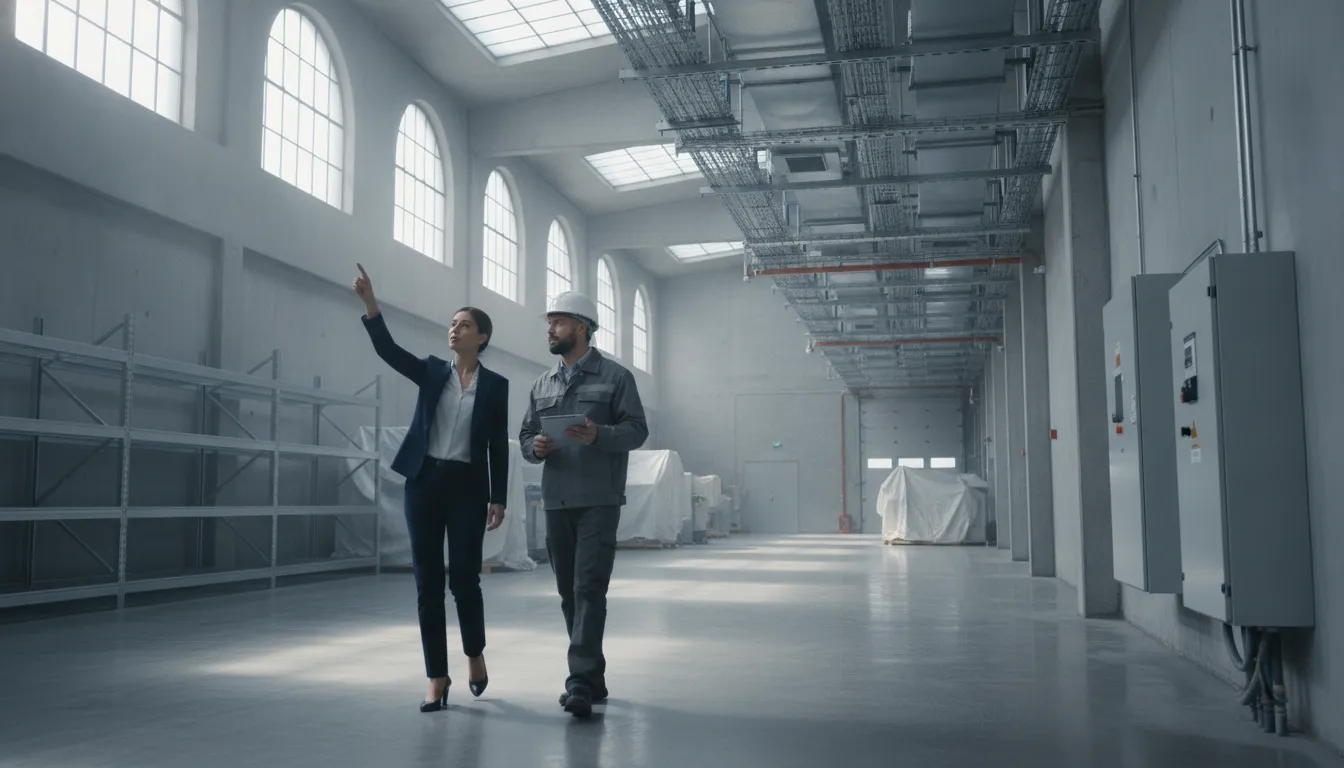
Industrial buildings rarely fail as a result of one overlooked repair. More often, owners face a sequence of aging systems, competing tenant needs, incomplete condition records, and capital decisions that arrive before the supporting evidence is organized. A disciplined plan turns those pressures into a manageable, documented program.
Industrial property capital planning Montreal owners can rely on should connect condition evidence, lifecycle priorities, tenant obligations, risk, timing, and available capital. The objective is not to predict every future repair. It is to establish defensible decision gates, coordinate qualified specialists and vendors, and preserve operational continuity while important work moves forward.
The practical starting point is a clear distinction between recurring operating responsibilities and capital work that protects, renews, or improves the asset. From there, the plan can assign ownership, document assumptions, and sequence projects against business impact rather than urgency alone.
For a customized approach to industrial property management and capital coordination in Greater Montreal, request a management proposal from PGK Realty Services or call 514-931-5111.
What belongs in an industrial property capital plan?
A capital plan is a decision framework for preserving and improving an industrial asset over time. It is not a recurring operating budget. An operating budget covers routine, expected activity such as regular maintenance and contracted services. A capital plan organizes larger or less frequent work, explains why it matters, identifies when it should be considered, and assigns the information and approvals needed before execution.
A workable planning record should answer five questions:
- What asset, system, or site condition is being considered?
- What evidence supports the recommendation?
- What risk or business impact does it address?
- What timing, tenant, vendor, or approval constraints apply?
- What decision, record, or next investigation is required?
Build the plan around the asset and its records
Start with an asset inventory that reflects how the property actually operates. The record should identify major building components, site features, operational systems, tenant-facing areas, and property improvements that may require renewal, replacement, or modernization. Attach the available supporting records: inspection dates, condition observations, repair needs, deferred work, prior project reports, warranties, leases, drawings, and vendor documentation. Where a specialist assessment or technical finding is needed, record the source and confidence of that information rather than presenting an assumption as a confirmed condition.
The U.S. Department of Energy's Condition Assessment Information System illustrates the value of maintaining structured information on repair needs, deferred maintenance, modernization cost, and last inspection date. Its reporting model is planning guidance, not a substitute for a Montreal property's own records or qualified professional advice. See the DOE CAIS overview for the cited example.
Define ownership, timing, and decision gates
Each proposed project should have a clear decision owner, such as the property owner, asset manager, portfolio representative, or an authorized property-management lead. The plan should distinguish immediate risk from work that can be investigated, scoped, approved, and scheduled later. It should also identify dependencies, tenant constraints, procurement steps, specialist input, and the evidence required to move from consideration to authorization.
Strategic facility-planning guidance from the U.S. Department of Energy describes planning as a way to support more proactive service delivery, reduce avoidable delays, and help implementation run more smoothly. It also emphasizes that planning must reflect the organization's specific needs and context. For an industrial property, the intended outcome is a defensible sequence of decisions: fewer reactive surprises. Clearer capital discussions, better coordination, and a current record of what has been completed, deferred, or reassessed.
Owners who need execution support can also review PGK's industrial property management services, including maintenance coordination, vendor oversight, inspections, and property-improvement project management.
How should industrial property capital planning in Montreal handle condition findings?
Build an asset record before ranking the work
Condition findings become useful only when they are tied to a defined asset and a specific site context. Start with an inventory that identifies the building, major systems, service areas, loading infrastructure, envelope components, and other assets material to operations. Record the location, function, observed issue, inspection date, available photographs or reports, and the person or firm that supplied the information. A warehouse roof, dock system, heating plant, and electrical distribution component may each require a different decision path, even when they appear in the same property file.
Separate direct observations from assumptions. A routine inspection note may identify visible deterioration, while an engineer, specialist contractor. Or other qualified professional may be needed to confirm the cause, severity, code implications, or appropriate remedy. Those inputs should be named in the record, along with the date and scope of the review. PGK can coordinate inspections, vendors, and property-improvement projects, but it does not replace the qualified specialists responsible for technical assessments.
Make uncertainty and deferred work visible
Not every finding deserves an immediate capital commitment, but every material finding should have a documented status. Use practical confidence levels such as confirmed, probable, or requiring further investigation. Then distinguish a repair need from deferred maintenance, a modernization opportunity, and a replacement or upgrade project. This prevents an unresolved question from being mistaken for a priced project, and it gives owners a clearer basis for requesting specialist scopes and comparing options.
The U.S. Department of Energy's Condition Assessment Information System offers an illustrative records framework, not a Montreal legal requirement. Its documented data elements include repair needs, deferred maintenance, modernization cost, and last inspection date. It also supports projects intended to reduce backlogs or replace and upgrade assets, as well as standard, ad-hoc, and archived reporting. Montreal owners can adapt the underlying discipline to their own property records, governance requirements, and professional advice without treating the system as a mandatory local standard.
Turn findings into a decision-ready file
For each proposed intervention, retain the evidence, current condition, confidence level, specialist input, preliminary scope, operational consequence, timing constraint, and next decision owner. Note whether the work protects continuity, addresses a worsening risk, supports modernization, or can be monitored safely. Update the file when work is completed, a new inspection changes the assessment, or a vendor scope clarifies the remedy. A consistent record allows owners, portfolio managers, and institutional stakeholders to understand what is known, what remains uncertain, and why a project is being advanced.
How do owners rank risk, urgency, and business impact?
A defensible capital priority is rarely determined by the loudest request. Owners need a consistent way to compare safety or compliance exposure, operational continuity, asset protection, tenant obligations, and the confidence of the evidence behind each recommendation. The objective is not to create a universal score. It is to make the reasoning visible, so an important project is not repeatedly deferred simply because an urgent request arrived first.
Separate immediate exposure from important protection
Begin by asking what could happen if the work is delayed, then distinguish the timing of the consequence from its scale. A condition that threatens people, regulatory standing, essential access, or a critical building function may require immediate escalation. A less visible renewal project may still deserve priority if postponement increases the risk of a larger interruption or leaves the owner unable to meet a documented tenant obligation.
This distinction reflects a central facility-planning principle: prioritize what is important rather than responding only to what is urgent. Facility teams can become reactive while handling requests, deadlines, and competing organizational demands. Each property's decision criteria must reflect its own operations, leases, records, and specialist advice. Use the matrix as a decision aid, not as a substitute for qualified technical review.
Use a matrix that records the decision, not just the score
| Priority lens | Questions to document | Typical decision signal |
|---|---|---|
| Safety and compliance exposure | Could delay create a serious hazard, breach an obligation, or require specialist confirmation? | Escalate promptly; verify with current records and qualified professionals. |
| Continuity and asset protection | Could failure interrupt access, production, occupancy, or a core building function? | Prioritize before the consequence becomes an emergency. |
| Tenant and lease obligations | What access, service, notice, or delivery commitment could be affected? | Coordinate timing and responsibilities before approval. |
| Evidence confidence | Is the recommendation supported by a recent inspection, reliable record, incident, or qualified assessment? | Fund known exposure; investigate uncertain scope before committing. |
Make uncertainty part of the recommendation
Confidence should not be treated as a footnote. Two projects may appear equally important, while one is supported by a recent finding and the other rests on an outdated assumption. Record the evidence, its date, the affected asset or obligation, the consequence of delay, and the next decision gate. That approach lets owners authorize investigation without pretending that an unconfirmed technical conclusion is settled.
Because every organization and site has different needs and context, the matrix should support judgment rather than replace it. A clear priority record helps owners sequence work, explain decisions to stakeholders. And reduce reactive facility management without inventing cost figures or technical requirements that the property records do not support.
How should a Montreal owner stage capital spending over time?
A capital plan becomes more useful when it shows not only what needs attention, but when each project should move forward. For an industrial property, timing should reflect condition evidence, operational exposure, tenant commitments, available decision time, and the consequences of deferral. The objective is not to predict every future expense. It is to give owners a disciplined sequence for making informed approvals.
Separate near-term decisions from planned work
Near-term work belongs in a clearly defined action horizon. This may include a documented deficiency that affects building performance, an asset approaching a known decision point, or deferred maintenance that could become more disruptive if left unaddressed. Each item should identify the evidence supporting it, the decision required, the responsible party, and any dependencies such as specialist review, permits, tenant coordination, or vendor scope development.
Planned work can then be grouped by system, site area, operational dependency, or project opportunity. Grouping related work may reduce repeated disruption and make procurement or scheduling more coherent, but the grouping should not conceal distinct risks. A roof issue, loading-door replacement, and electrical upgrade may share a mobilization window while still requiring separate condition records, scopes, and approval decisions.
Use longer horizons to protect reserve logic
Longer-horizon items should remain visible even when they are not ready for authorization. A useful record can distinguish repair needs, deferred maintenance, modernization needs, inspection dates, and replacement or upgrade projects. The U.S. Department of Energy's Condition Assessment Information System illustrates this type of structured tracking, including data for repair needs, deferred maintenance, modernization cost, and last inspection date. It also supports projects intended to reduce backlogs and replace or upgrade assets. See the DOE CAIS reference for the underlying framework.
Reserve logic should be tied to the current evidence and the property's actual obligations, not to an invented universal percentage. Owners can preserve flexibility by maintaining approval scenarios: proceed now, prepare and defer, or combine with another project. Each scenario should state what changes, what risk remains, and what new information would trigger a review. Standard and ad hoc reporting can help maintain that record as conditions evolve.
Present decisions in approval-ready scenarios
For each major project, present the recommended horizon alongside alternatives, dependencies, expected operational effect, and the consequence of waiting. This gives owners and institutional stakeholders a decision record rather than an undifferentiated backlog. It also helps prevent reactive requests from consuming the entire planning process, while keeping site-specific context at the center of capital decisions.
How can capital work limit tenant disruption?
Capital work in an occupied industrial property should be planned around tenant operations, not treated as an isolated construction exercise. The objective is not to promise that disruption can always be eliminated. It is to identify where business activity, people, equipment, deliveries, and lease obligations could be affected, then make the timing and controls explicit before work begins.
Start with obligations, access, and operating constraints
Review the relevant lease provisions, tenant responsibilities, access rights, notice periods, insurance requirements, and approval procedures before confirming a work sequence. Then map how each tenant uses the affected area. A loading dock, production zone, warehouse aisle, office entrance, fire route, or utility room may have different operational consequences, even within the same building.
Develop a practical access plan with the tenant and the project team. Define where contractors may enter, how materials will be delivered, which routes must remain clear, and whether security or escort procedures apply. If a shutdown is unavoidable, establish the shortest workable window and confirm who authorizes it. Temporary barriers, alternative access, dust control, weather protection, or temporary services may reduce the impact, but each measure should be reviewed for suitability at the specific site.
Sequence the work and communicate decision points
Break the project into logical stages rather than giving occupants one broad construction notice. Sequence tasks so that high-impact activities occur during agreed low-activity periods where feasible, while lower-impact preparation proceeds separately. A written schedule should identify planned outages, noisy or hazardous work, delivery dates, tenant actions, and the person responsible for each communication.
Communication should continue as conditions change. Provide advance notice, confirm the next access or shutdown window, and give tenants a clear contact for urgent issues. Do not assume that an apparently minor change is operationally insignificant. A delayed delivery, altered route, or temporary closure can affect staffing and customer commitments.
Verify restoration before closing the project
Post-work verification should confirm that affected areas, services, access routes, safety controls, and tenant interfaces have been restored as agreed. Record outstanding deficiencies, responsible parties, and completion dates instead of treating practical handover as an informal conversation.
PGK's documented capabilities include maintenance coordination, vendor oversight, inspections, and project management for property improvements (industrial property management services). Its role is to coordinate the management process and records, while qualified specialists remain responsible for technical assessments where required. The planning principle is site-specific: facility planning must reflect the organization's needs and context rather than assume every operation is the same.
What should vendor coordination look like before work begins?
Vendor coordination should begin before a contractor arrives on site. The objective is not simply to obtain a proposal. It is to establish a controlled delivery plan that makes the scope, constraints, responsibilities, reporting expectations, and approval points clear to everyone involved. For an industrial property, that preparation reduces avoidable uncertainty around occupied areas, loading activity, access, safety procedures, utilities, and tenant operations.
Define the scope and the site conditions
Start with a written scope that separates the required outcome from the proposed method. Identify the affected building systems or areas, known deficiencies, operational constraints, access requirements, working hours, shutdown limitations, protection measures, cleanup expectations, and the records the vendor must provide. Existing plans, leases, service histories, inspection findings, and specialist recommendations should be assembled before bids are compared. Where engineering, code, or regulated technical judgment is required. The owner should confirm the requirement with an appropriately qualified professional rather than treating a property manager or general contractor as the technical assessor.
Comparable bids are most useful when vendors are responding to the same scope and assumptions. Compare inclusions, exclusions, schedule, lead times, warranty terms, temporary measures, alternates, and clarification questions. The aim is a transparent basis for selecting the right approach, not an unsupported claim that one figure represents the market.
Assign responsibility and control changes
A simple responsibility matrix should name who approves the scope, coordinates tenant access, communicates shutdowns, supervises site activity, reviews invoices, confirms completion, and retains closeout records. It should also identify the escalation route when site conditions differ from the original assumptions. Every change should be documented with its cause, operational effect, revised scope, schedule impact. And approval status before the work proceeds, except where an immediate response is necessary to protect people or property.
Reporting should be proportionate but consistent: progress, decisions required, emerging risks, safety or access issues, and approved changes should be visible to the owner. PGK's documented capabilities include maintenance coordination, vendor management, inspections, property-improvement project management, reporting, risk management, and audit-ready documentation. Owners seeking industrial property project oversight can use that support to maintain continuity from scope definition through closeout. Final records should include approved scope, permits or specialist documents where applicable, warranties, invoices, photographs, deficiencies, and confirmation that affected areas and systems were returned to service.
How often should an industrial capital plan be reviewed?
An industrial capital plan should receive a formal review at least once a year, but an annual meeting should be the minimum cadence rather than the only trigger. The plan is a working management record. It should change when the property's condition, occupancy, obligations, or operating model changes.
Use annual reviews to reset priorities
At the annual review, compare planned work with completed projects, open deficiencies, current inspection records, deferred maintenance, and the property's operational needs. Confirm which projects remain appropriate, which require updated scopes, and which should move forward because their risk or business impact has changed. A completed project should not simply disappear from the record; its closeout documentation should inform future maintenance and replacement decisions.
This discipline helps owners distinguish important work from the urgent requests that can otherwise dominate facility management. The review should support proactive decisions while remaining grounded in the property's records, operations, leases, and qualified specialist advice. The right review depth remains site-specific because every organization and property has different needs.
Update the plan after meaningful events
Do not wait for the next annual cycle after a significant event. Revisit the plan when a new condition finding, incident, lease change, major tenant requirement, completed capital project, or operating change affects the property's risk profile or timing. A change in production, storage, loading, access, or occupancy can alter how work must be sequenced and how disruption is managed. Specialist findings, code-related requirements, and engineering recommendations should be incorporated from qualified professionals and current property records.
Make the review useful to decision-makers
For a board, trust, financial institution, or other institutional owner, the review should produce a clear record of priorities, rationale, timing, responsibility, risks, and decisions required. PGK's documented capabilities include maintenance coordination, vendor management, inspections, property-improvement project management, risk management, reporting, and audit-ready documentation. Through industrial property management services, PGK can support complete or partial management scopes for Montreal-area properties in English or French, helping owners maintain visibility without carrying every day-to-day coordination burden themselves. Owners can also review the broader real estate asset management guide for adjacent portfolio-planning context.
Frequently Asked Questions
What should an industrial property capital plan include?
A practical plan should connect the asset inventory, condition findings, deferred work, modernization needs, tenant obligations, risk priorities, expected timing, and decision owners. It should also identify the records or specialist inputs supporting each recommendation, so owners can distinguish confirmed requirements from items that need further investigation.
How should owners use condition findings to set priorities?
Organize findings by consequence, urgency, operational impact, and confidence in the available evidence. Safety or compliance concerns may require immediate specialist review, while other work can be grouped into a planned project or monitored until better information is available. Current inspection records and qualified professional advice should support technical decisions.
How can capital work reduce disruption for industrial tenants?
Start with lease obligations, tenant access requirements, operating constraints, shutdown windows, and communication responsibilities. Sequence work around the activities most sensitive to interruption, define temporary measures where appropriate, and confirm completion before normal operations resume. A documented plan gives tenants and vendors a clearer basis for coordination.
Can a property manager support industrial capital planning?
Yes. A property manager can coordinate maintenance information, vendors, inspections, project schedules, reporting, and closeout records while keeping owners informed of decisions that require approval. PGK offers complete or partial management for industrial properties, with scope tailored to the owner's needs. Technical assessments and regulated inspections remain matters for qualified specialists.
Get started with a customized industrial property proposal
A well-structured management plan can help coordinate maintenance, vendors, and capital projects while giving owners greater peace of mind across their Greater Montreal portfolios. PGK Montreal can discuss your property objectives and prepare a customized proposal shaped around the support you need. Request a customized proposal or call 514-931-5111 to begin the conversation.