
Insights
Condo management services: what owners should expect
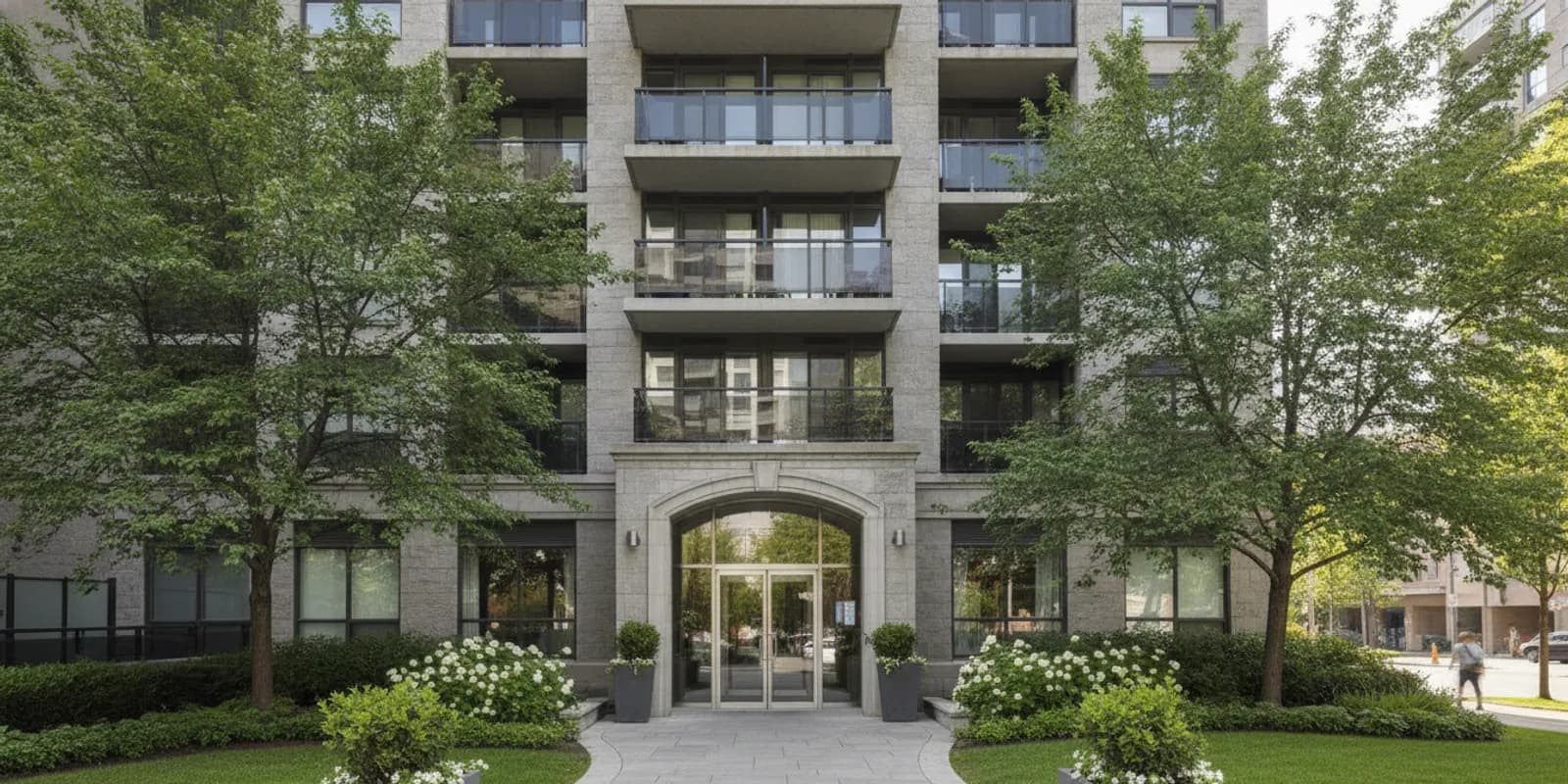
Choosing condo management services is not just a matter of assigning routine tasks. Owners and boards need a clear system for identifying risks, authorizing decisions, documenting work and confirming that important items are resolved. The right controls make responsibilities visible without adding unnecessary process.
Contact Le Service Mobilier PGK to discuss your property
In brief: Put risk controls in writing before relying on a manager. Define authority limits, create a property-specific risk register, track maintenance and vendor work to closure, separate financial duties, document incidents and test emergency communication. Review these controls regularly against the building, its governing documents and the management agreement.
Request a proposal to define management responsibilities and oversight for your property.
What should condo management services control?
Condo management controls are the agreed procedures that reduce the chance that an important obligation is missed, misunderstood or left unresolved. They are not a promise that nothing will go wrong. They help the board and manager notice exposures, make decisions at the right level, keep a reliable record and follow up after work is assigned.
Start with the building’s actual risk profile. A mid-rise residential condominium, a mixed-use property with ground-floor retail and a portfolio of several buildings do not have identical needs. Consider building systems, common areas, occupancy, service contracts, financial arrangements, building rules and the board’s decision process. Then translate these facts into assigned responsibilities and repeatable checks.
Condo boards remain responsible for governance and decisions reserved to them under the applicable documents and law. A property manager may coordinate operations and provide recommendations, but the management agreement and the condominium’s governing documents should specify which decisions the manager may make independently, which require board approval and what must be escalated promptly. Owners should obtain legal, accounting or engineering advice from qualified professionals when a question falls outside the manager’s role.
Scale is one useful input when deciding how much oversight is practical. A U.S. Census Bureau housing report grouped surveyed properties by size—fewer than five units, five to 49 units, and 50 or more units. Those groupings are not a risk standard, and the report is historical, but they illustrate why a control set should reflect the property’s scale rather than follow a generic checklist. Read the Census Bureau report on property owners and managers.
How can owners make authority and accountability clear?
Ambiguous authority is a preventable operational risk. If a manager is unsure whether to call a contractor, approve a repair or notify the board, a time-sensitive issue can stall. If authority is too broad or informal, costs and decisions may not receive the oversight owners expect. Put the boundaries in the management agreement and an operating protocol that is easy to use.
- Set approval thresholds. Identify routine work the manager can authorize, the maximum amount per item or incident, and the situations that require advance board approval. Define a separate emergency exception so a hazard does not wait for a scheduled meeting.
- Name decision owners. For each major function, identify who recommends, approves, executes and verifies. Avoid assigning a task to “management” without naming the role responsible for closing it.
- Agree on escalation triggers. Examples may include an active leak, a life-safety concern, an interruption to a critical building service, a suspected break-in, a material budget variance or a vendor dispute. The board and manager should define thresholds that match the property.
- Record exceptions. When an urgent situation requires a decision outside the ordinary route, document what happened, who was contacted, why action could not wait and what follow-up is still needed.
- Keep authority current. Update the protocol after board changes, a new management agreement, a major building project or a change to banking and signing arrangements.
A simple responsibility matrix is often enough to expose gaps. For instance, the manager may collect bids and recommend a contractor, the board may approve a project above an agreed threshold, and the manager may coordinate access and track completion. The board or its designated reviewer can then confirm that the work and supporting documents are complete. The exact allocation must fit the contract and governing documents.
What belongs in a property risk register?
A risk register turns broad concern into a working list. It should be concise enough to maintain and specific enough to guide action. For each issue, record the location or process, what could happen, the possible operational or financial consequence, the existing control, the next action, the responsible person and a review date. Note the source of the observation, such as an inspection, owner report, service record or financial review.
Owners and managers can organize the register by control area:
- Building condition and maintenance: recurring work orders, overdue repairs, aging components identified for professional review, water intrusion reports and unresolved deficiencies. The register should point to assessment or repair records, not substitute for technical advice.
- Life safety and access: concerns reported about common areas, access control, emergency contact information, contractor access and the procedures for notifying responsible parties. Verify which measures apply to the property with the relevant professionals.
- Financial administration: approval limits, payment authorization, reconciliations, budget variances, receivables follow-up and custody of invoices and contracts.
- Vendor and contract oversight: missing insurance or qualification documents where applicable, unclear scopes, contract renewal dates, service-level expectations and incomplete close-out records.
- Governance and records: decisions awaiting board action, action items without an owner, incomplete records and upcoming contract or policy reviews.
- Business continuity: critical contacts, alternate communication routes, access to essential records and arrangements for continuity if a key person is unavailable.
Do not treat every item as equally urgent. Establish a practical priority scale based on the likelihood of occurrence, potential impact and how quickly action is needed. Define the scale in plain language; for example, “immediate escalation,” “scheduled action,” and “monitor.” A numerical score can help compare issues, but it should not create false precision. Record the reasoning behind a high-priority rating and who is expected to act next.
Review open risks at a regular board or management review, and update the register when facts change. A resolved item should have a closure note and evidence, such as a service report or approval record. If a risk cannot be eliminated, document the remaining exposure and the decision about how to manage it. A list that is never revisited is an archive, not a control.
How should maintenance and vendor work be tracked?
Maintenance failures can grow from a small, unrecorded observation into a disruptive and costly problem. A sound process provides a clear path from the first report to verified completion. The manager’s role commonly includes coordinating maintenance, communicating with vendors and keeping records; the board should confirm the exact scope and authority in the proposal and agreement.
- Capture the report. Record the date, location, reported condition, source and any immediate action. Give each request a reference or other way to find it again.
- Assess and route. Identify whether the issue needs emergency attention, a qualified assessment, routine service or board direction. Do not use a management log as a substitute for a professional inspection.
- Authorize the work. Apply the agreed spending and approval limits. Keep the scope, quote or reason for direct dispatch with the decision record.
- Coordinate access and communication. Confirm timing, affected areas, notice requirements and the person who will receive updates. Preserve a record of any changes to scope.
- Verify completion. Obtain a work report, invoice or other appropriate close-out record. If the initial issue remains, reopen it rather than marking it complete.
- Review repeat issues. Look for patterns by location, system or vendor. Repeated repairs may call for a broader assessment or a budget discussion.
Vendor oversight should be proportionate to the work. Before engagement, clarify the scope, deliverables, schedule, access, reporting, approval route and who can authorize changes. Collect and retain relevant contracts, insurance documents and other records as required by the property’s policy and professional advice. At completion, compare the work performed with the approved scope and reconcile the invoice through the agreed financial process.
Owners may also want a recurring review of service contracts and renewal dates. A calendar entry alone is not enough: assign a reviewer, set a date early enough to make a decision and preserve the decision. The review can ask whether the scope is still appropriate, whether recurring issues remain open and whether the agreement’s responsibilities align with the management plan.
Which financial controls should owners expect?
Financial controls should make it possible to trace a transaction from authorization through payment and reporting. The detail will depend on the building, banking arrangements and management agreement, but owners should understand who can initiate, approve, release and review funds. Where practical, separate duties so that one person does not control every stage without independent review.
- Use written signing and payment authority that matches board decisions and current banking mandates.
- Require supporting invoices or equivalent records and an approval trail for payments.
- Reconcile accounts on a defined schedule and assign a reviewer who can identify and question discrepancies.
- Compare actual results with the approved budget, explain significant variances and record any board decisions.
- Track receivables and follow-up actions consistently, while respecting privacy and applicable requirements.
- Limit access to financial records and payment credentials to authorized people; review access when roles change.
- Keep records in an orderly, retrievable form so a board transition does not interrupt oversight.
Good financial reporting is more than a collection of statements. It should help decision-makers understand current cash position, commitments, overdue items, budget variances and decisions awaiting attention. Agree on the reporting format and timing at the outset. Ask for explanations that distinguish a one-time timing difference from a recurring exposure, and document who will follow up.
PGK describes its management work as including bookkeeping, rent collection, maintenance coordination, tenant management, leasing and property inspections. For a condominium, owners should use a proposal discussion to clarify which of these activities apply to their property, what records are provided and how financial review responsibilities are allocated. See PGK’s property management services for an overview of its service scope.
How can boards compare risk controls in management proposals?
Compare proposals by the operating controls they describe, not only by a list of included tasks. A proposal should make it possible to see who does what, how the board retains appropriate oversight and what information will be available to assess performance. Fees are customized to property type and service scope, so ask for the proposed work and related assumptions to be stated clearly rather than relying on a generic fee comparison.
| Control area | What to confirm in the proposal | Useful evidence or follow-up |
|---|---|---|
| Authority | Spending thresholds, routine approvals and emergency escalation route | Written authority matrix and examples of approval records |
| Maintenance | How requests are logged, prioritized, assigned and closed | Sample work-order fields, service reports and open-item review process |
| Vendors | Who scopes work, obtains approvals, coordinates access and reviews completion | Contract records, quote comparisons where appropriate and close-out documentation |
| Financial oversight | Payment approvals, reconciliations, reporting schedule and variance follow-up | Sample report structure and description of independent review |
| Incidents | Notification triggers, contact sequence, documentation and post-incident review | Written escalation protocol and incident log fields |
| Continuity and records | How essential records and communication continue through staff or board changes | Records handoff plan, access controls and alternate contacts |
| Scope and fees | Included services, exclusions, assumptions and proposal-based fee arrangement | Service schedule tied to the property’s needs and responsibilities |
Ask the prospective manager to walk through a realistic scenario: a common-area leak is reported after hours, the source is uncertain, and a repair may exceed the routine approval limit. Who receives the report? Who decides whether immediate action is needed? How is the board notified? What is documented the next business day? A specific scenario often reveals gaps that a general promise of “full service” does not.
Also check whether the proposal distinguishes management coordination from professional services. A manager can help coordinate an engineer, accountant, insurer or other specialist, but the proposal should not imply that management replaces independent technical or legal advice. Clarify who retains those professionals, who authorizes their work and how their recommendations enter the board’s decision record.
Le Service Mobilier PGK has served property owners since 1986 and provides English and French service. Its experience includes residential, commercial and industrial property management, as well as international owners and institutional clients. Owners can review information about PGK and request a property-specific discussion; verify the exact services, reporting and approval structure in any proposal before appointing a manager.
Request a management proposal for your property
Frequently asked questions about condo management risk controls
Does hiring a property manager transfer all risk from the condo board?
No. A manager can take on defined operational duties, coordinate work and maintain records, but the board’s governance responsibilities and the manager’s delegated authority depend on the applicable documents and agreement. Owners should identify retained board decisions, escalation requirements and professional advice needs in writing.
How often should the risk register be reviewed?
Set a regular review interval that fits the property and board calendar, and review an item sooner when a new incident, material building change, unresolved repair or contract decision arises. Assign each open action a responsible person and due date. Record the reason for closure or for accepting an unresolved exposure.
What records should a manager provide for maintenance work?
Agree on records that let the board follow the issue from report to completion: date and location, work description, approvals, vendor communications, relevant quote or scope, completion report and invoice. The exact record depends on the work. For technical questions, rely on an appropriate qualified professional.
Can one checklist work for every condominium?
A checklist can prompt discussion, but it cannot replace a property-specific review. Building systems, service contracts, governing documents, size and operational arrangements vary. Use a common baseline, then assign controls and review frequency according to the building’s actual exposures and the board’s obligations.
How should owners put the controls into practice?
Begin with the management agreement, governing documents, current service contracts and the board’s existing approval process. Identify where responsibilities are unclear or no one is assigned to verify completion. Then agree on a manageable first set of controls: authority limits, incident escalation, financial review, work-order tracking, vendor records and a dated register of open risks.
Assign an owner and a review date to each control. Test the process with a few real operating scenarios, then refine it when a step is unclear or evidence is hard to retrieve. Keep the controls proportionate: a small property may need fewer reporting layers than a complex portfolio, but it still benefits from clear authority, documented decisions and follow-through.
For Montreal owners, a management proposal is a useful place to make these expectations concrete. Describe the property, the recurring responsibilities and the board’s preferred oversight, then ask the manager to state what is included, what requires an additional professional and how issues will be reported. To put a property-specific management plan into discussion, request a proposal from Le Service Mobilier PGK.