Insights
Commercial Building Management Montreal: Owner Guide
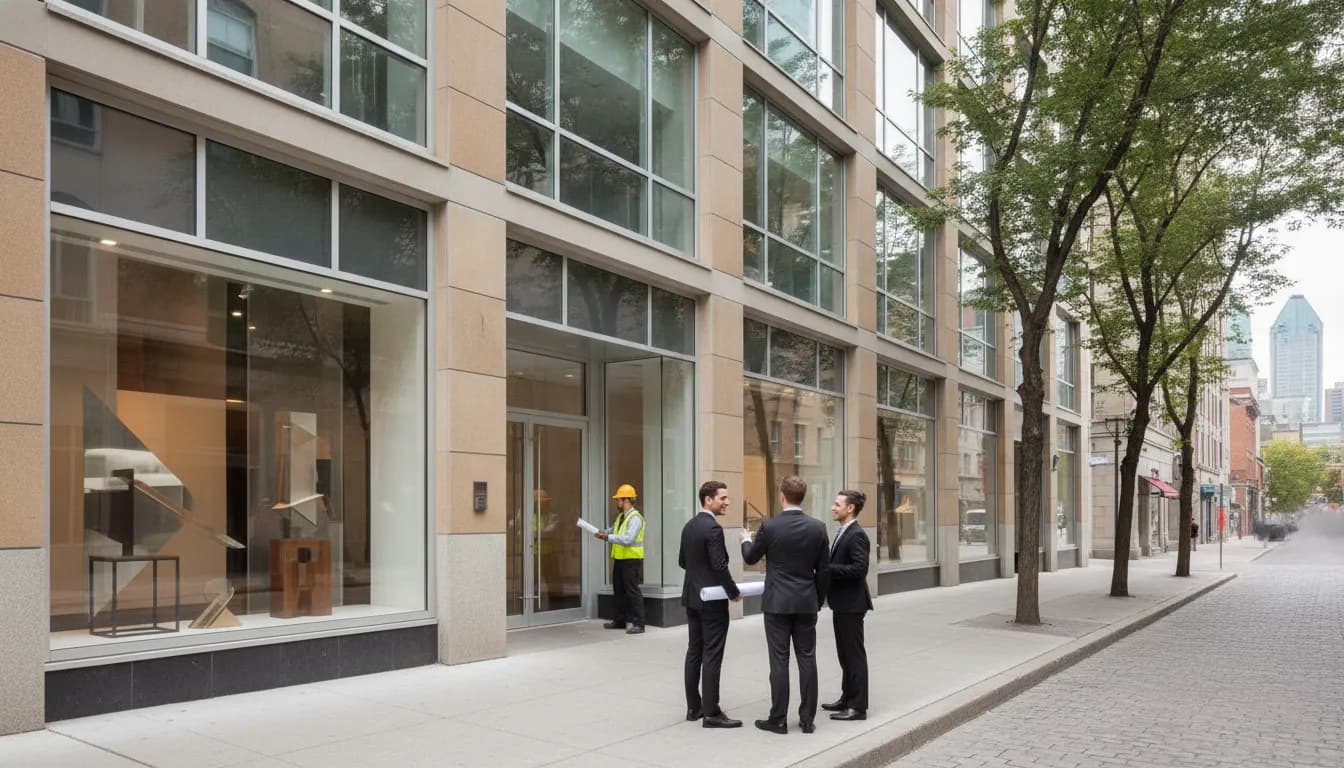
Managing an office or retail property involves more than collecting rent or responding when something breaks. Owners coordinate building systems, maintenance, vendors, tenants, budgets, and operating records. A clear structure keeps routine responsibilities from competing with portfolio oversight.
Commercial building management montreal covers the coordinated operation of office, retail, and commercial properties. It includes maintenance, tenant relations, financial administration, vendor oversight, and reporting. The scope may be comprehensive or partial, depending on the building and the owner's retained responsibilities.
Request a customized commercial building management proposal from Le Service Mobilier PGK
For owners in Greater Montreal, the practical question is not simply whether to outsource management. It is which responsibilities require local coordination and how performance should be documented. It is also where building operations end and broader asset strategy begins. Le Service Mobilier PGK provides complete or partial management in English and French. Its model is designed to reduce the day-to-day burden of ownership.
The distinction becomes clearer when commercial building management is examined as an operating discipline, rather than as a catch-all term for leasing or administration.
What Is Commercial Building Management in Montreal?
Commercial building management in Montreal is the coordinated oversight of a building's day-to-day operations, services, occupants, financial activity, and maintenance planning. It applies to office buildings, retail properties, and other commercial facilities. Owners need reliable execution without losing visibility into the property.
The operational focus
The work is practical and continuous. It keeps the building and surrounding property operating as intended. It also coordinates essential services and organizes information for owner decisions. The U.S. Office of Personnel Management describes building management as managing facilities to provide appropriate office space and essential building services. That operational focus is distinct from simply owning an asset or arranging an occasional repair.
How it differs from residential management
Residential management often centres on individual homes, apartments, or condominium units and the needs of residents. Commercial building management must account for how businesses use shared or dedicated premises. That includes service continuity, building access, common areas, vendor coordination, and commercial occupant expectations. The appropriate scope depends on the property and the owner's requirements, not on a one-size-fits-all package.
How it differs from asset management
Asset management takes a broader, longer-term view of value, investment strategy, financing, and portfolio performance. Building management is closer to the property itself. It translates the owner's objectives into operating routines, records, coordination, and follow-through. For example, an operating budget can organize anticipated rents, expenses, repairs, and maintenance projects, as described in a public property-management agreement. That budgeting framework helps connect daily operations with owner oversight, without confusing building operations with the broader investment strategy.
For Montreal owners, management may be complete or partial. Le Service Mobilier PGK states that its scope can be tailored to client requirements. This allows an owner to delegate the operational burden that needs professional attention while retaining an appropriate level of oversight.
What Services Are Included in Commercial Building Management?
Commercial building management brings the operational responsibilities of an office building, retail property, or commercial complex into a coordinated service scope. The objective is not simply to respond when an issue arises. It is to keep building operations, financial administration, tenant relationships, and property upkeep organized around the owner's requirements.
Day-to-day operations and maintenance coordination
Building operations require practical knowledge of maintenance, repairs, building systems, and the surrounding property. A management scope may coordinate service providers, track requests, organize repairs, and help distinguish routine operating costs from larger replacement or improvement expenditures. Owners evaluating this function should ask how preventive work, vendor communication, documentation, and escalation are handled. PGK's commercial building maintenance planning resource provides additional context on organizing this responsibility.
Financial administration and tenant support
Depending on the mandate, commercial management may include bookkeeping, rent collection, tenant communication, leasing coordination, and property inspections. These responsibilities connect the building's physical condition with its financial and occupancy performance. A clear process should define who records receipts and expenses, follows up on tenant matters, coordinates access for work, and reports material issues to the owner.
- Maintenance coordination and repair follow-up
- Bookkeeping and operating record administration
- Rent collection and account follow-up
- Tenant management and issue communication
- Leasing coordination and property inspections
| Management area | Owner question | Useful evidence |
|---|---|---|
| Operations | Who coordinates vendors and repairs? | Service records; open-item tracking |
| Tenant relations | Who receives and escalates requests? | Contact and triage process |
| Financial administration | How are income and expenses reported? | Bookkeeping; reporting cadence |
| Scope | What remains with the owner? | Proposal responsibilities; exclusions |
Complete or partial management, based on the mandate
Not every owner needs the same arrangement. Complete management can place the day-to-day operating burden with the management company. Partial management can assign selected functions, such as maintenance coordination, rent collection, or leasing support. PGK offers both complete and partial management, with the scope tailored to the client's requirements. Document the distinction in the proposal, including responsibilities, reporting expectations, decision thresholds, and the owner's retained role.
For a commercial building management mandate in Montreal, the right service scope is the one that gives the owner meaningful oversight without leaving critical operational responsibilities undefined.
How Should Tenant Relations Be Managed in Office and Retail Buildings?
Strong tenant relations depend on a defined operating process, not improvised responses to individual requests. The manager should give occupants a clear contact route, acknowledge issues promptly, distinguish urgent risks from routine service matters, and maintain an accurate record through resolution. The same discipline supports office tenants, retail operators, and the owner's broader operating objectives.
Set communication and triage protocols
Tenants should know whom to contact for maintenance, access, security, leasing questions, and emergencies. A practical triage process records the location, nature, urgency, and operational impact of each issue before assigning the next action. It should also define when a matter moves from a building manager to a specialized contractor, landlord representative, insurer, or emergency contact.
- Confirm receipt and expected next steps.
- Classify the issue by safety, service, financial, or leasing impact.
- Track responsibility, timing, approvals, and completion evidence.
- Escalate unresolved or recurring issues through a documented chain.
Coordinate leasing, inspections, and building operations
Tenant communication should connect with leasing administration rather than operate as a separate function. Lease obligations, permitted uses, access requirements, signage questions, renewal discussions, and prospective-tenant visits may affect operations. Owners evaluating this scope should also review guidance on commercial leasing and tenant selection, because tenant fit and day-to-day building performance are closely related.
Inspections should be planned around the building's use and documented consistently. In an office property, that may include common areas, access systems, mechanical concerns, and tenant-reported deficiencies. In a retail building, visibility, customer-facing conditions, loading access, hours of operation, and interactions between neighboring occupants may require additional attention. The objective is not simply to identify defects, but to create a reliable record for follow-up and owner reporting.
Document patterns and escalate appropriately
Commercial operations involve building systems, maintenance, repair, staffing, contract services, and emergency management. These responsibilities are reflected in commercial building operations guidance from NYU's commercial building systems curriculum. A manager should therefore look beyond isolated complaints. Repeated temperature issues, access failures, water concerns, or tenant disputes may indicate a maintenance, vendor, lease, or capital-planning issue that requires owner-level review. Complete or partial management can be structured around the owner's requirements, provided responsibilities and escalation authority are explicit from the outset.
How Do Maintenance and Building Systems Affect Commercial Operations?
Maintenance is not a background task in an office, retail property, or commercial complex. It influences tenant experience, equipment reliability, operating continuity, and the owner's ability to plan capital work. Effective commercial building management coordinates these responsibilities rather than treating each repair as an isolated event.
Preventive coordination protects continuity
A practical program begins with an inventory of major systems, recurring service requirements, vendor responsibilities, and open deficiencies. Mechanical, electrical, plumbing, life-safety, and building-envelope work may involve different specialists, while custodial services affect the day-to-day condition experienced by occupants and visitors. The manager's role is to coordinate schedules, document completed work, monitor follow-up items, and distinguish routine operating costs from replacement or improvement expenditures.
That distinction matters for budgeting. Government property-management guidance describes capital expenditures as amounts paid for replacements or improvements, separate from ordinary operating activity. A clear record of both helps owners evaluate immediate repairs alongside longer-term capital planning. PGK's commercial building maintenance planning resource provides additional context on preventive maintenance and emergency response.
Controls and monitoring support informed decisions
Building controls can help operators observe and adjust equipment performance, including heating, ventilation, and air-conditioning systems. The U.S. Department of Energy reports that properly implemented building controls can reduce HVAC energy use by up to 30% in some buildings. This is a DOE-reported finding, not a PGK result or a guaranteed outcome for any property. Actual value depends on the building, equipment, controls, settings, and operating practices.
For owners, the operational priority is reliable information: alarms and readings should be reviewed, anomalies should be investigated, and service decisions should be recorded. The Department of Energy's building controls guidance explains the role of controls in building performance.
Emergency planning clarifies the response
Even a well-maintained building requires a defined response process for water intrusion, equipment failure, power loss, or other disruptions. Written responsibilities, escalation contacts, vendor access details, communication steps, and post-incident documentation help reduce confusion when time matters. Owners can review the related property emergency response planning guidance when assessing this part of a management scope.
What Financial Reporting Should Commercial Property Owners Expect?
Financial reporting should give owners a dependable view of what the property earned, what it spent, and which operating decisions require attention. It is not limited to a rent roll or a year-end summary. For an office, retail property, or commercial complex, reporting should connect bookkeeping and rent collection records with maintenance activity, vendor costs, operating budgets, and documented follow-up.
Records that support day-to-day oversight
A useful reporting process should organize rent collection information, invoices, approved expenses, contracts, and outstanding items in a way that can be reviewed without reconstructing the property's history. Reporting should also distinguish recurring operating costs from larger replacement or improvement expenditures. That separation helps owners assess current operations while considering longer-term capital planning.
Because commercial operations involve building systems, maintenance, repairs, budgets, and contract services, financial records should be read alongside operational documentation. This is particularly important where HVAC, plumbing, security, elevators, or other building systems generate recurring service requirements. A building operations audit can document routine practices, preventive-maintenance schedules, and compliance considerations, but it should not be presented as a substitute for professional legal or regulatory advice.
Visibility for owners and institutions
Owners should know what is included in the reporting scope, how often updates are delivered, who approves expenditures, and how exceptions are escalated. Institutional owners and financial stakeholders may also expect consistent supporting documentation, clear budget-to-actual explanations, and an audit trail for material decisions. The precise format depends on the property and mandate, but the underlying objective is consistent: informed oversight without requiring the owner to manage every transaction personally.
A practical reporting checklist
- Rent collection records and outstanding balances are clearly identified.
- Operating expenses, vendor invoices, and approved payments are documented.
- Routine operating costs are distinguished from capital improvements or replacements.
- Maintenance activity and material building issues are connected to financial reporting.
- Open decisions, exceptions, and required owner approvals are easy to find.
- The reporting cadence and responsibilities match the complete or partial management scope.
Reporting is one part of broader commercial real estate asset management. When reviewing a management proposal, owners should ask to see a sample reporting structure and confirm how bookkeeping, rent collection, operating updates, and documentation will work together.
How Do You Choose a Commercial Building Management Company in Montreal?
The right provider should match the building, the ownership structure, and the level of operational involvement you expect. A sound evaluation goes beyond a service list: it tests whether the company can coordinate daily operations, communicate with tenants and vendors, and give owners dependable visibility.
Start with property fit and management scope
Ask whether the company regularly manages the type of property you own, such as an office building, retail property, or commercial complex. The operating realities, tenant relationships, maintenance priorities, and reporting needs can differ significantly across these settings.
Then define the required scope. Some owners need comprehensive management, while others need selected support, such as maintenance coordination, rent collection, bookkeeping, leasing coordination, or tenant operations. Le Service Mobilier PGK offers complete and partial management, allowing the scope to be tailored to the client's requirements.
Test the operating model before signing
Request a clear explanation of communication protocols, issue escalation, vendor coordination, and reporting. Ask who handles routine tenant requests, how urgent building matters are escalated, and what information the owner receives regularly. A provider should also explain how it distinguishes operating costs from larger repair or improvement decisions, rather than treating every request as an undefined expense.
For a Greater Montreal property, local capability matters. Confirm how the team supports buildings in the relevant area and whether communication is available in the language your tenants, vendors, and stakeholders require. PGK has operated since 1986, serves clients in English and French, and identifies Greater Montreal as its core service area.
Clarify the proposal and transition plan
A useful proposal should identify responsibilities, exclusions, reporting expectations, decision thresholds, and the information needed during handoff. Ask how existing leases, vendor contacts, maintenance records, budgets, access details, and open issues will be reviewed. You can also ask whether vendor contracts are evaluated through a defined request-for-proposal process when appropriate.
- Which services are included, and which remain with the owner?
- What reporting will be provided, and at what frequency?
- Who is the day-to-day contact for tenants and vendors?
- How will unresolved issues be documented and escalated?
- How is the proposal tailored to the property's type, scope, and complexity?
PGK's management pricing is proposal-based and customized to those factors. To compare scope clearly and discuss a practical transition, request a management proposal.
Frequently Asked Questions
How much does commercial building management in Montreal cost?
Pricing depends on the property's type, size, operating requirements, and the management scope requested. PGK Montreal prepares customized proposals rather than applying a fixed fee, allowing owners to define complete or partial management services for their building. Request a management proposal for a property-specific assessment.
What services are included in commercial building management?
Services may include maintenance coordination, bookkeeping, rent collection, tenant management, leasing coordination, property inspections, vendor oversight, and operational reporting. The appropriate mix depends on the building and the owner's internal capabilities. Office, retail, and commercial-complex owners can define a comprehensive scope or select only the functions requiring external support.
What does a commercial property manager do?
A commercial property manager coordinates the building's day-to-day operations and the surrounding property's upkeep. The role may include organizing maintenance, responding to tenant issues, managing service providers, tracking financial activity, supporting leasing, and keeping the owner informed. Effective management connects operational decisions with clear oversight.
How do I choose a commercial building management company in Montreal?
Evaluate the provider's experience with your property type, proposed service scope, communication process, reporting standards, maintenance coordination, and vendor-management approach. Confirm whether the company can support office and retail operations in Greater Montreal and whether bilingual service is available. A clear proposal should identify responsibilities, exclusions, reporting, and the transition process.
What is the difference between commercial property management and building management?
Building management focuses on operating a specific facility and its surrounding property, including services, maintenance, and tenant-facing needs. Commercial property management can encompass that work while also addressing rent collection, leasing coordination, bookkeeping, owner reporting, and broader oversight. The terms overlap, so owners should confirm the exact responsibilities included in a provider's mandate.
Ready to Request a Commercial Property Management Proposal?
A customized proposal can help clarify the right management scope for your office or retail property, from day-to-day coordination to reporting and tenant support. Le Service Mobilier PGK can review your requirements and outline a practical approach for your Greater Montreal property. Request a customized commercial property management proposal to get started.